Fusion

Thermonuclear Fusion

heat the deuterium-tritium fuel to a sufficienly high temperature

Necessary temperature

around 10keV, about 100 million degrees centigrade

  • In a tokamak the plasma particles are confined to a toroidal region by a magnetic field, being held by the field in small gyrating orbits.
Energy required for ignition
  • The nuclei of deuterium and tritium fuse to produce an alpha particle with the release of a neutron

Reference Book
Tokamaks by John Wesson

Graph Neural Networks - A Review of Methods and Applications

Abstract

Graph neural networks are neural models that capture the dependence of graphs via message passing between the nodes of graphs.

  • propose a general design pipeline for GNN models

  • discuss the variants of each component

  • systematically categorize the applications

  • propose four open problems for future research

Introduction

Graphs can be used across various areas

social networks

Graph Convolutional Networks with Markov Random Field Reasoning for Social Spammer Detection, 2020

natural science

Graph Networks as Learnable Physics Engines for Inference and Control, 2018

Interaction Networks for Learning about Objects, Relations and Physics, 2016

protein-protein interaction networks

Protein Interface Prediction using Graph Convolutional Networks, 2017

knowledge graphs

Knowledge Transfer for Out-of-Knowledge-Base Entities: A Graph Neural Network Approach, 2017

other research areas

Learning Combinatorial Optimization Algorithms over Graphs, 2017

The fundamental motivations of graph neural networks
several comprehensive reviews on graph neural networks

Geometric deep learning: going beyond Euclidean data, 2017
Graph convolutional networks: a comprehensive review, 2019

several surveys focusing on some specific graph learning fields
contributions
  • We provide a detailed review over existing graph neural network models. We present a general design pipeline and discuss the variants of each module. We also introduce researches on theoretical and empirical analyses of GNN models.

  • We systematically categorize the applications and divide the applications into structural scenarios and non-structural scenarios. We present several major applications and their corresponding methods for each scenario.

  • We propose four open problems for future research. We provide a thorough analysis of each problem and propose future research directions.

General design pipeline of GNNs

Find graph structure

structural scenarios
non-structural scenarios

Specify graph type and scale

Directed/Undirected Graphs

Homogeneous/Heterogeneous Graphs

Static/Dynamic Graphs

Design loss function

Node-level
Edge-level
Graph-level

Supervised setting
Semi-supervised setting
Unsupervised setting

Build model using computational modules

Propagation Module
Sampling Module
Pooling Module

The general design pipeline for a GNN

NDCN(Neural Dynamics on Complex Networks) combines ordinary differential equation systems (ODEs) and GNNs.

Instantiations of computational modules

An overview of computational modules

Propagation modules - convolution operator

The emerging field of signal processing on graphs: Extending high-dimensional data analysis to networks and other irregular domains

  • Spectral approaches

the normalized graph Laplacian

A wavelet tour of signal processing

several typical spectral methods which design different filters

Spectral Network

Spectral Networks and Locally Connected Networks on Graphs

Deep Convolutional Networks on Graph-Structured Data

ChebNet

Wavelets on Graphs via Spectral Graph Theory

Convolutional Neural Networks on Graphs with Fast Localized Spectral Filtering

Convolutional Neural Networks on Graphs with Fast Localized Spectral Filtering

GCN

  • Basic spatial approaches
  • Attention-based spatial approaches
  • General frameworks for spatial approaches
Propagation modules - recurrent operator
Propagation modules - skip connection

Reference Paper
Graph Neural Networks: A Review of Methods and Applications, 2018

GNN Paper

Review

Model

Application

Image Formation

2D points

homogeneous vector

2D projective space

inhomogeneous vector

2D lines

homogeneous vector
line equation

Reference Book
Computer Vision: Algorithms and Applications by Richard Szeliski

Uniform E and B Fields

The conditions: E = 0

The equation of motion
Cyclotron frequency

combine

The Larmor radius

we get

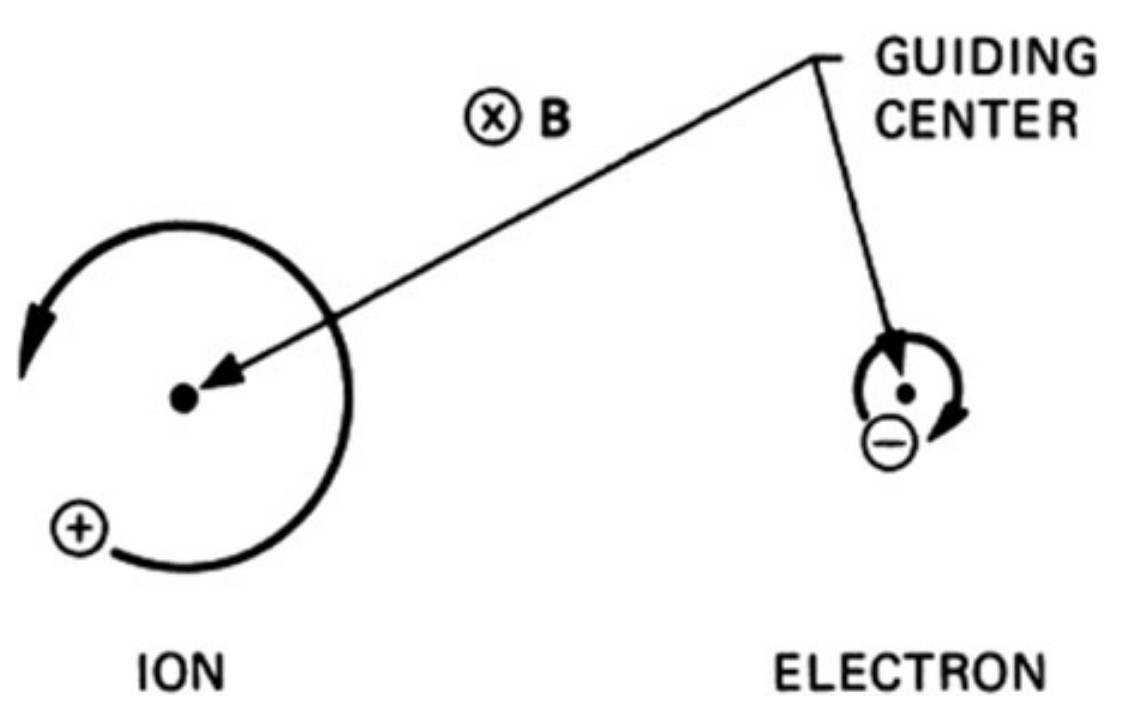
Larmor orbits in a magnetic field

  • guiding center ()
  • plasmas are diamagnetic

The conditions: finite E

The equation of motion

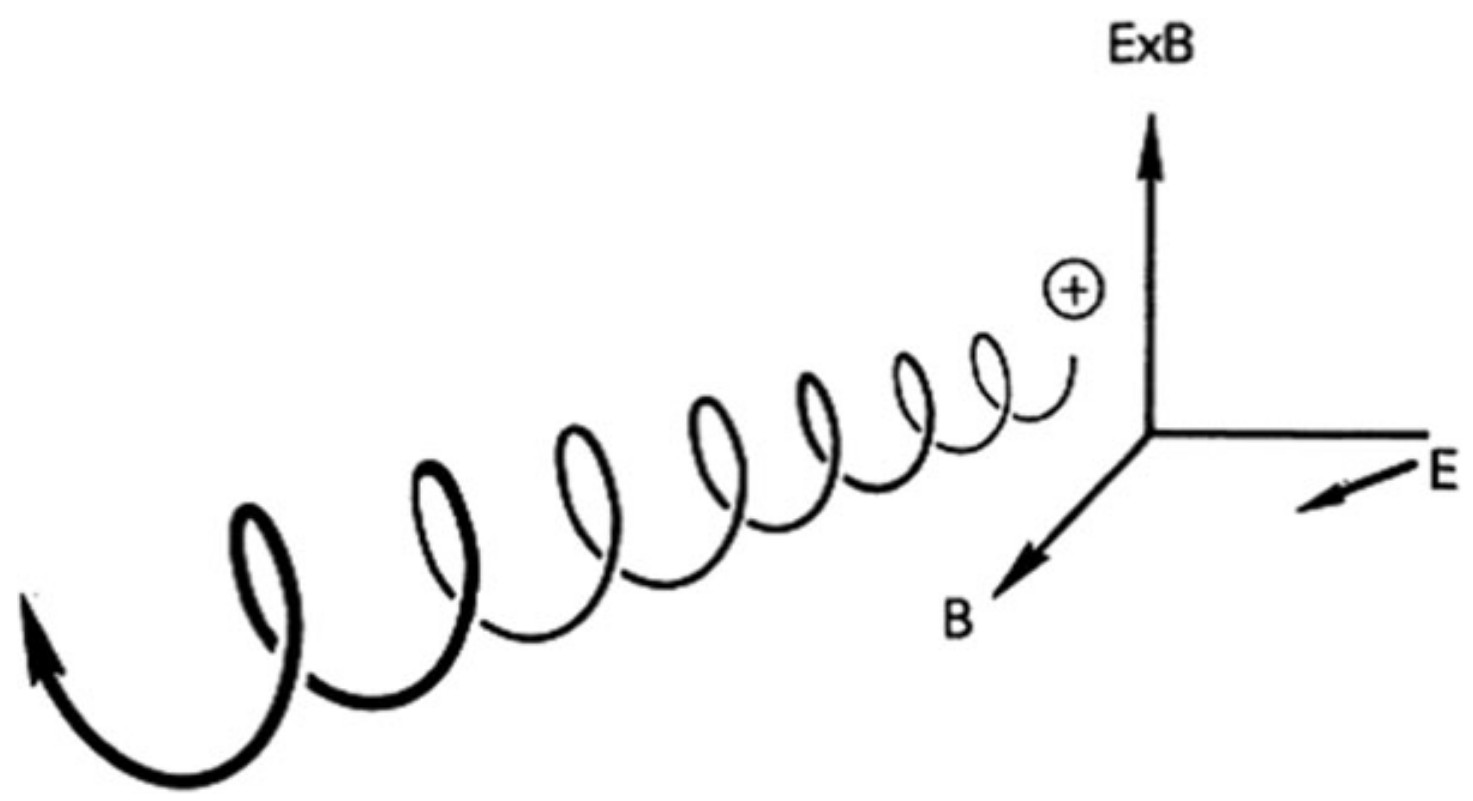
Particle drifts in crossed electric and magnetic fields

  • The usual circular Larmor gyration
  • A drift of the guiding center

The actual orbit of a gyrating particle in space

  • The three-dimensional orbit in space is therefore a slanted helix with changing pitch.

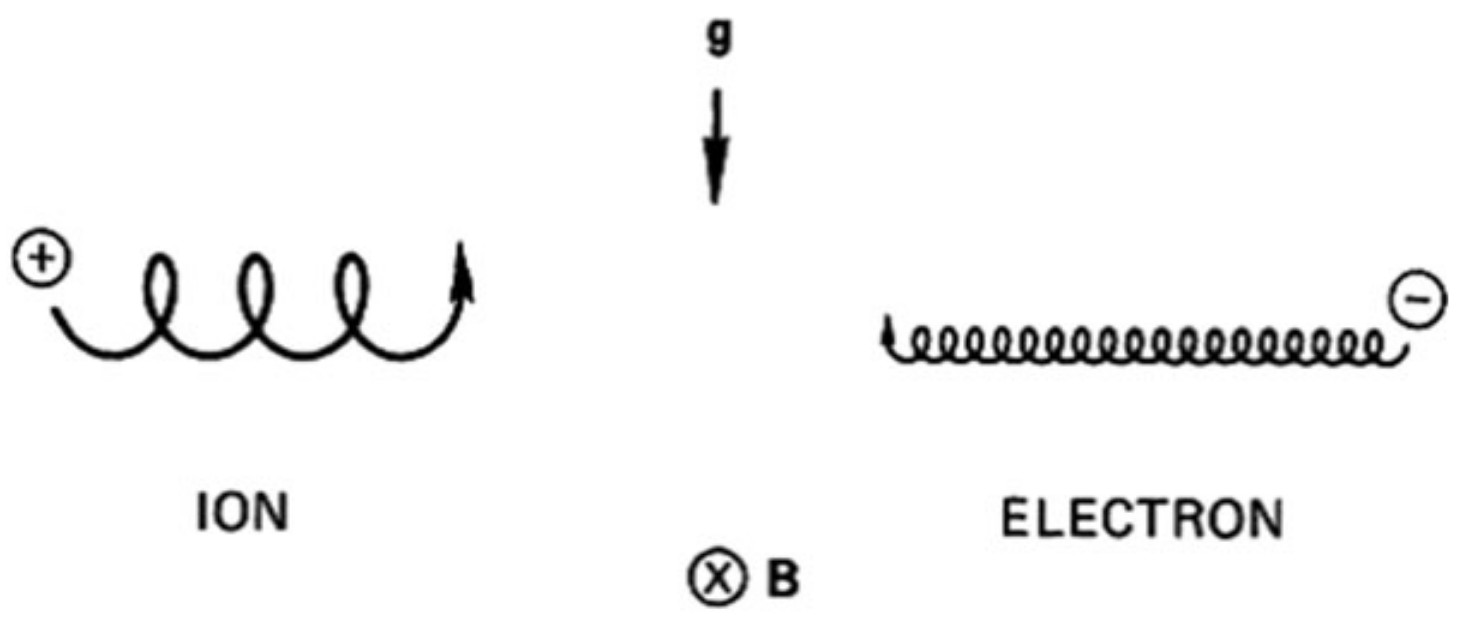
The conditions: gravitational field

The drift of a gyrating particle in a gravitational field

  • The magnitude of is usually negligible
  • But an effective gravitational force due to centrifugal force is not negligible

Reference Book
Introduction to Plasma Physics and Controlled Fusion by Francis F. Chen

Introduction to Plasma

Our Universe is made of 69% dark energy, 27% dark matter, 1% normal matter.

What is plasma?

Plasma is also called the “fourth state of matter”. Solid is heated to become a liquid, liquid is heated to become a gas.
Upon further heating, the gas is ionized into a plasma. Since plasma usually exists only in a vacuum, we need to pump the air out of a vacuum chamber in the laboratory.

The Definition of Plasma

A plasma is a quasineutral gas of charged and neutral particles which exhibits collective behavior.
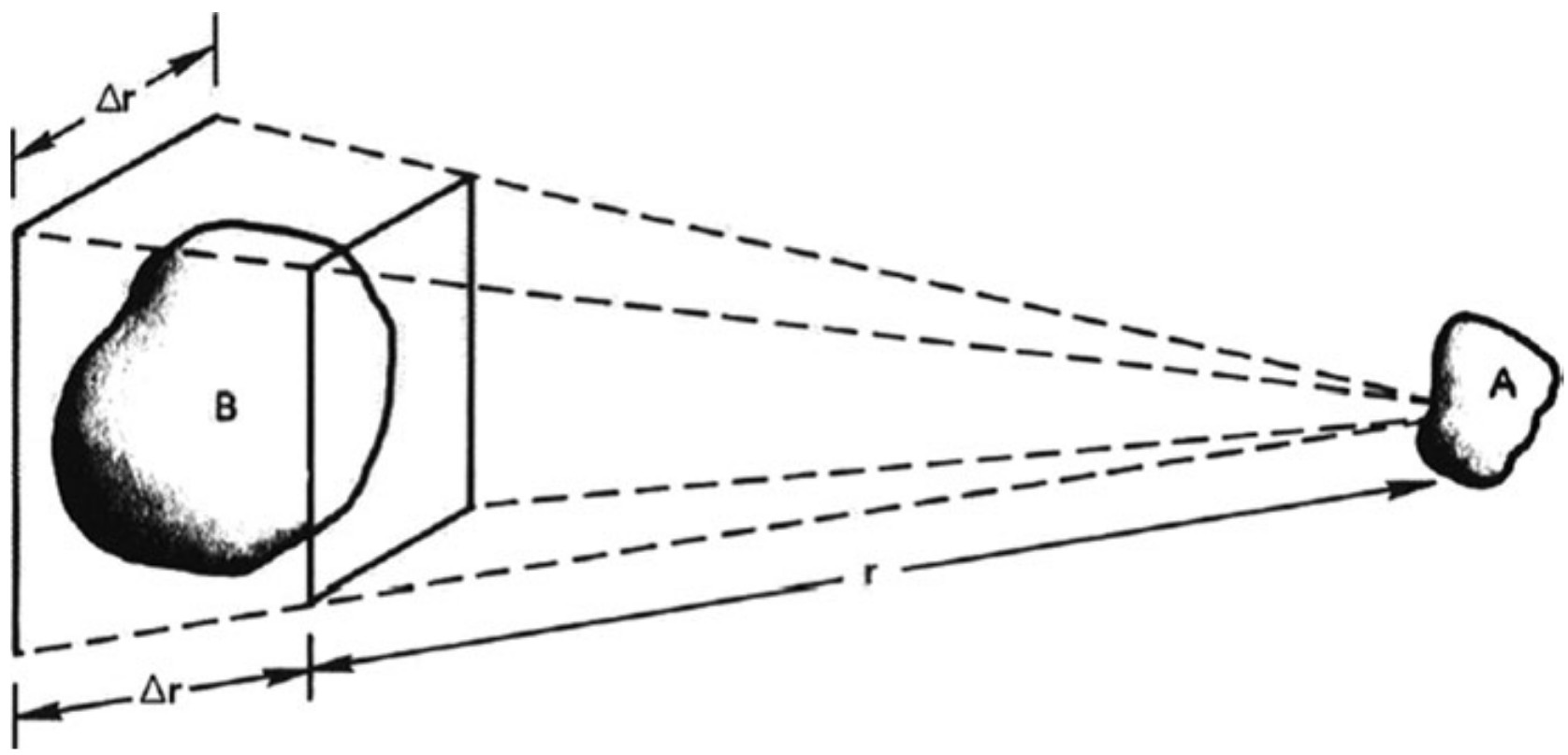
The long range of electrtostatic forces in a plasma

  • The Coulomb force between A and B diminishes as .
  • However, for a given solid angle($\Delta$r/r = constant), the volume of plasma in B that can affect A increases as .

The Saha Equation

Physical meaning
  • When temperature is raising, the whole value is increasing exponentially with .

  • The higher value of , the lower recombination rate of ionized atoms.

The Maxwellian Distribution

The one-dimensional Maxwellian distribution
Boltzmann’s constant K
The particles density n
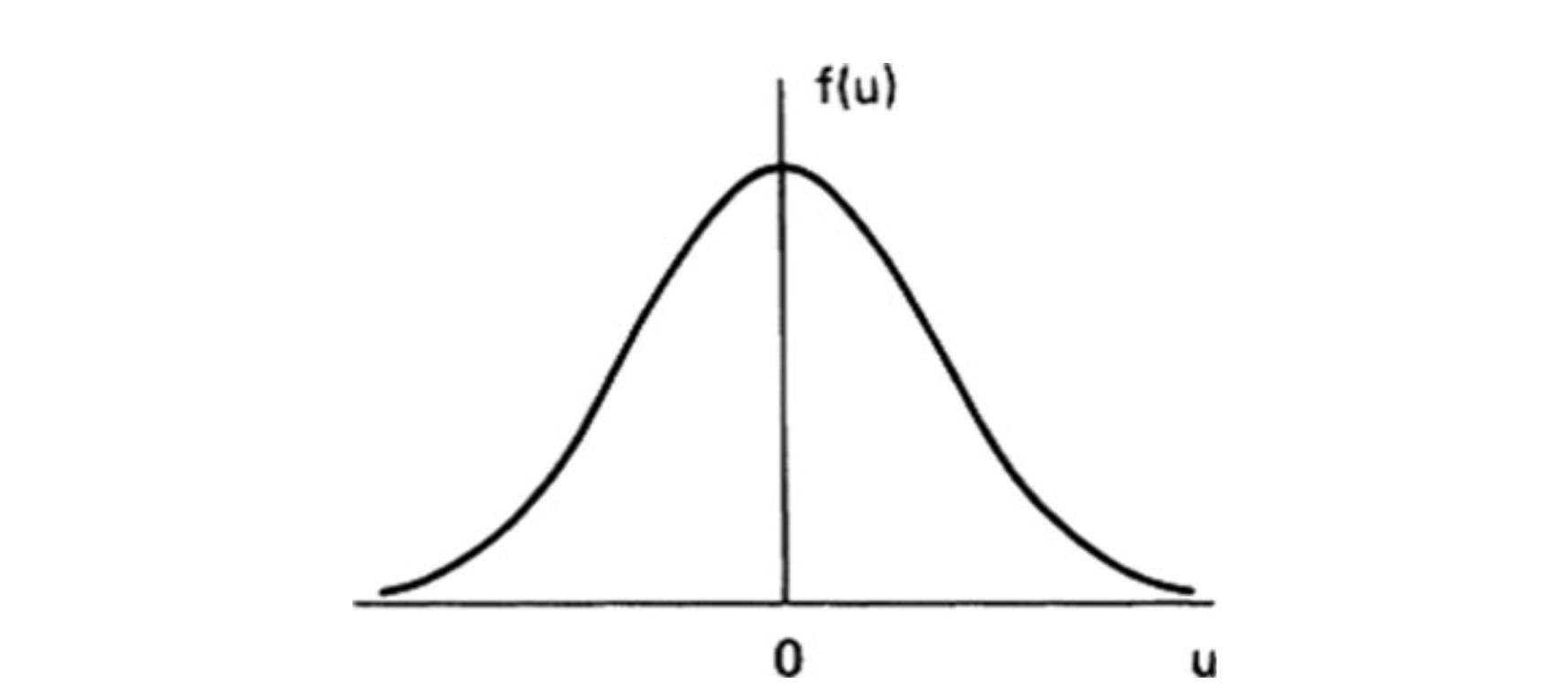
A Maxwellian velocity distribution

The average kinetic energy is $\frac{1}{2}KT$

The three-dimensional Maxwellian distribution

Reference Book
Introduction to Plasma Physics and Controlled Fusion by Francis F. Chen

Anaconda Command

Anaconda Prompt Operation

Create new environment

conda create - -name environment pakage

conda create - -name python3 python=3.8

Activate environment

conda activate environment

Exit environment

deactivate environment

Delete environment

conda remove -n environment - -all

Copy environment

conda create -n environment - -clone existing_environment

View environment information

conda info -e
conda env list
conda info - -envs

View python version

python -V

Install package

conda install package

View package information

conda search package

Install package in a specify environment

conda install -n environment package

Update package in a specify environment

conda update -n environment package

Delete package in a specify environment

conda remove -n environment package

View the installed packages in the current environment

conda list

View the installed packages in a specify environment

conda list -n environment